


The island preserves deep-rooted religious traditions that are part of its cultural identity. Holy Week is one of them.
During these days, churches, streets and squares are filled with liturgical acts, processions and customs passed down from generation to generation. But beyond the more visible celebrations, there are little-known traditions that reveal a different side of the island.
Today we invite you to discover some of those curiosities that make Easter in Ibiza have its own character.
Salpassa: an ancient Easter blessing recovered
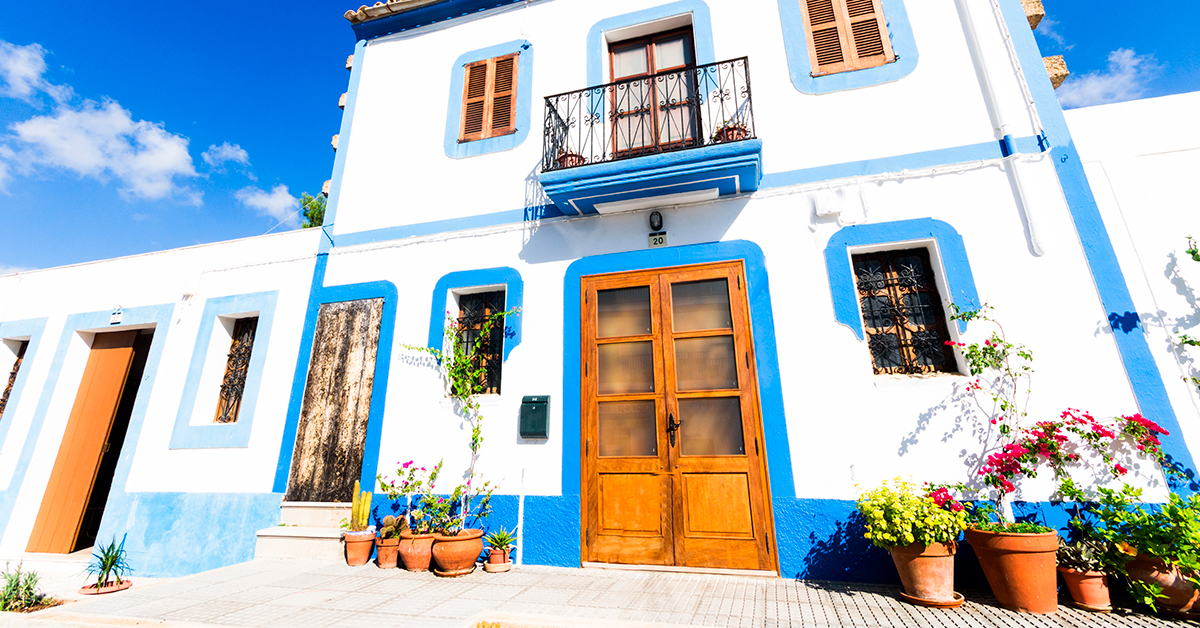
One of the most unique traditions of Holy Week in Ibiza is the salpassa, a custom linked to the Easter season that for centuries was part of the daily life of families on the island.
This practice consisted of priests visiting homes to bless homes, bringing holy water and salt with them. After the blessing, a small handful of salt was left and placed by the inhabitants in different corners of the house, especially in the bedrooms, as a symbol of protection.
The origin of this tradition can be traced back to ancient purification rituals—such as the pagan salis sparsio—that over time were integrated into the Christian tradition. It was also common to paint door and window frames blue or to draw crosses with lime on the walls of country houses, symbols associated with spiritual protection.
For years this custom had been practically in disuse, but recently the diocese of Ibiza and Formentera has promoted its recovery, allowing families who wish to do so to request this blessing again in their parishes.
The processional monstrance of Ibiza: a unique jewel of religious heritage
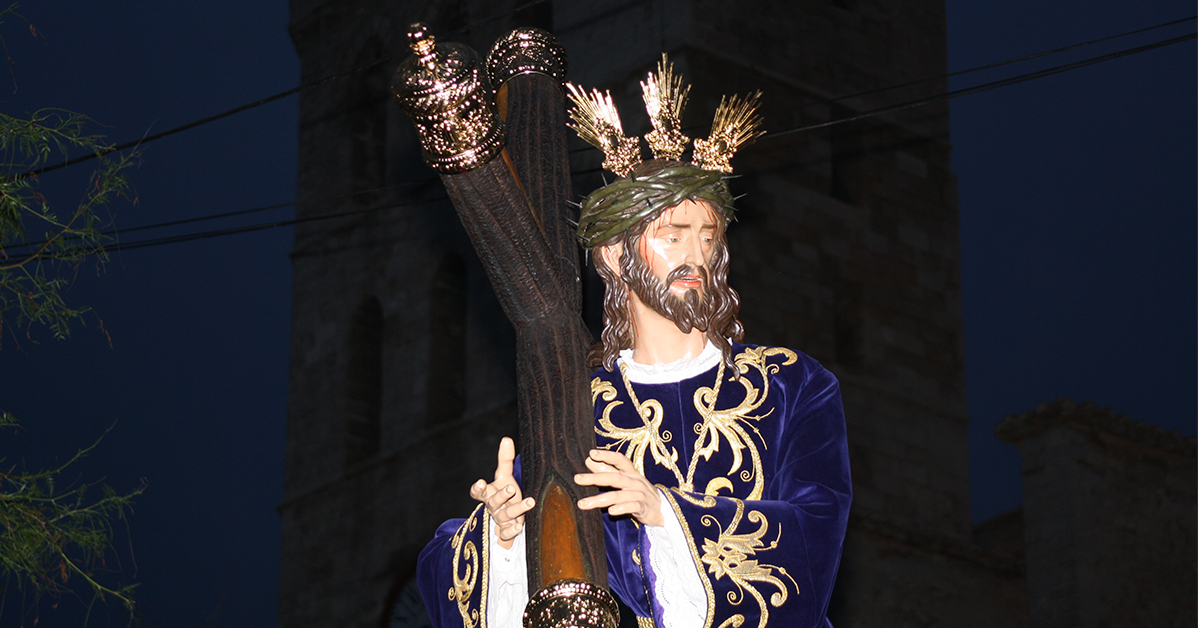
Another of the most outstanding pieces of Ibiza's Holy Week is the processional monstrance of the Cathedral of Ibiza, a work of enormous historical and artistic value.
But what exactly is a processional monstrance? It is a piece of goldsmithing used in religious celebrations to expose or carry the consecrated host, considered the body of Christ within the Catholic tradition. In some solemn ceremonies, this monstrance is used in processions or special liturgical acts.
The Ibiza's monstrance is particularly special because it is considered the oldest preserved seat monstrance in Spain, made in 1399 by the silversmith Francesc Martí.
The piece has an octagonal base and a vertical structure inspired by Gothic architecture, with a shape reminiscent of a small temple. Decorated with enamels, reliefs and gilded silver elements, it depicts different scenes from the life of Christ and combines several traditional silverware techniques such as embossing, chiseling or casting.
This jewel of religious heritage is part of the treasure of the Cathedral of Santa María and is one of the most important historical pieces linked to the celebrations of the island.
Processions, music and gastronomy: the most traditional Holy Week
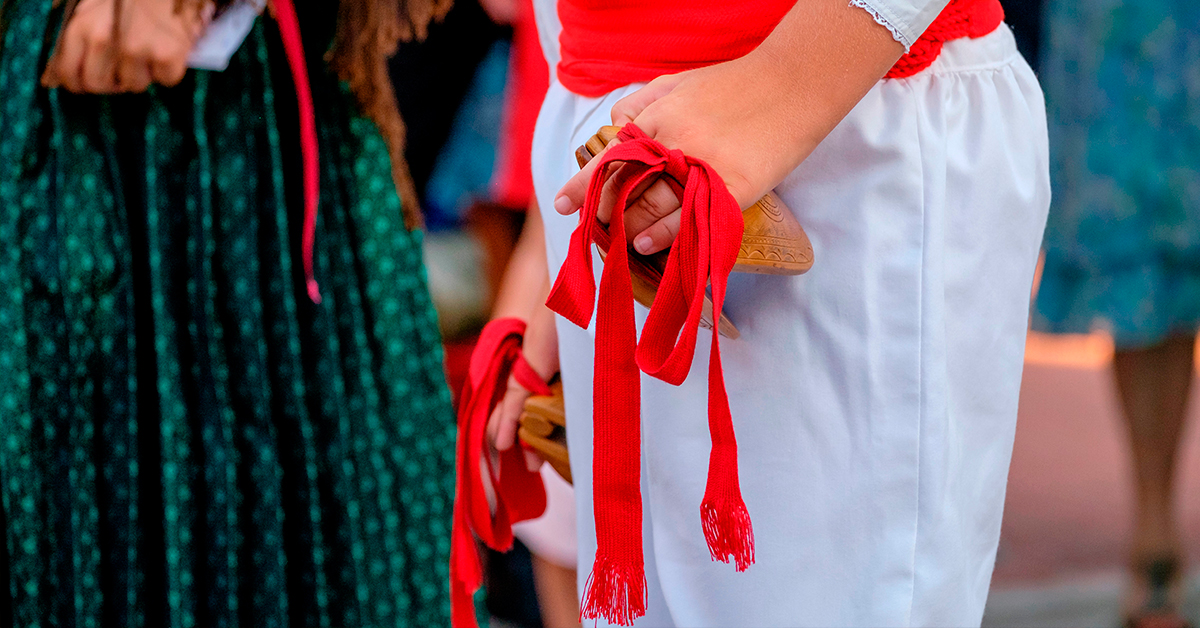
Beyond these curiosities, Easter in Ibiza maintains many traditions that are repeated every year and that are part of the island's cultural heritage.
As in other parts of Spain, the brotherhoods are in charge of organizing the processions. In the city of Ibiza alone there are seven active brotherhoods that participate in the liturgical and processional acts of these days.
Churches take on a special prominence thanks to the "Cases Santes", a tradition in which temples are decorated with flowers, bread and glasses of wine, creating a symbolic scenery that invites contemplation.
Music also plays an important role with the Caramelles de Pascua, old songs from the traditional Ibizan songbook recognised as an Asset of Cultural Interest. Performed with flute, drum, castanets and the traditional espasi, these songs narrate the death and resurrection of Christ and fill the churches with emotion during the celebrations.
As for the processions, the most intense moments are experienced in Eivissa and Santa Eulària, where the streets are filled with floats, Nazarenes and faithful throughout the week. One of the most impressive is the Holy Burial on Good Friday, which runs through the historic streets of Dalt Vila.
The gastronomy also reflects the tradition of these dates. During Holy Week, when meat consumption was avoided in the past, the prominence fell on dishes such as cuinat, made with collejas and legumes, as well as traditional sweets such as bunyols, orelletes and flaó, very present on family tables.
Descubreibiza.com makes it easy for you
We hope you are encouraged to enjoy Easter in Ibiza and discover what is special about it. You can also check the programs of Holy Week from Ibiza and Santa Eulària!
In our guide you can discover the best of the white island: idyllic beaches, unparalleled natural landscapes, villages, gastronomy and culture.
In addition, you can now count on Lali, our AI-based chatbot available in 97 languages, which will help you discover the island in a personalized way and answer any questions in real time.
Looking for the best route to explore Ibiza? Our route planner will guide you to make the most of your stay, adapting to your interests and preferences.
Experience, enjoy and discover Ibiza at your own pace!


